The Rulai Route: Jiuzhaigou
Foreword by Lingyu Sun – Click to Open
Certain natural wonders on Earth carry an air of intensity; they serve as reminders that the planet was sculpted with intention, at least to those who believe in a greater consciousness behind it. Take the Fjords of Norway for example. Your vessel weaves through a serpentine inlet of deep glacial waters, flanked on both sides by towering cliffs and cascading waterfalls, each more sheer and unscalable than the last.
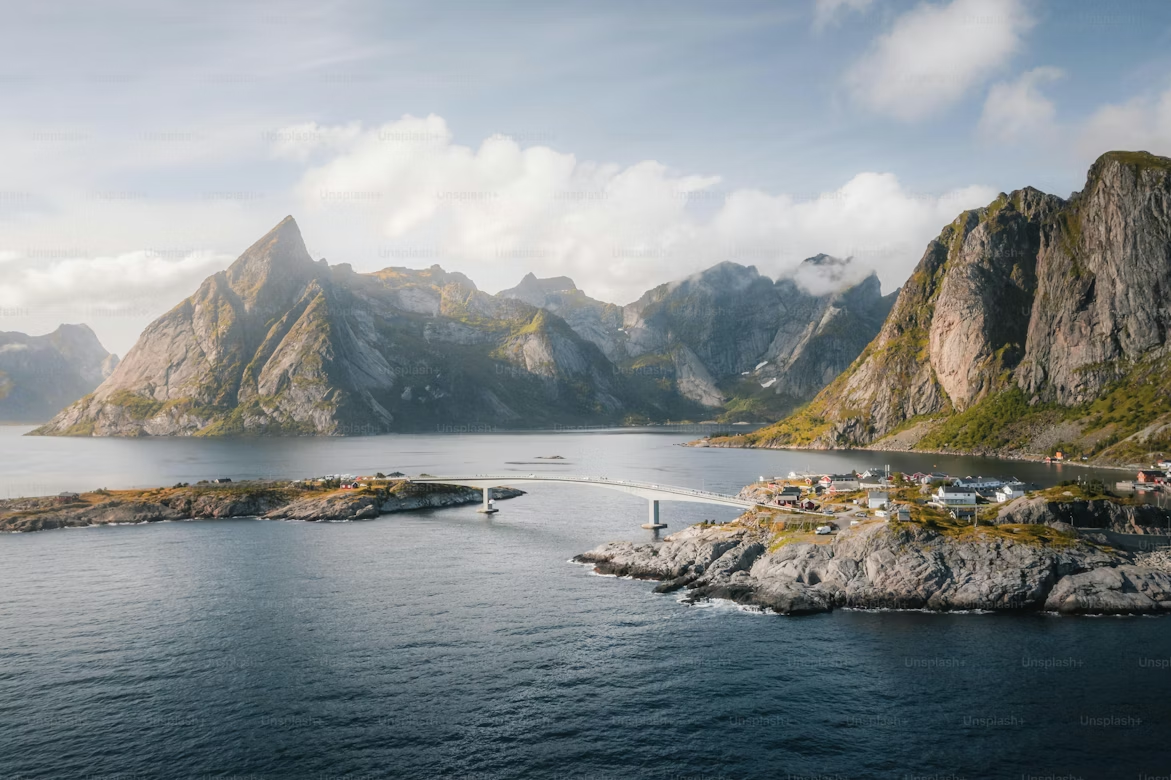
Natural beauty has a way of grounding us, making us momentarily ignore the back pain from the long-haul flight and breathe in that crisp Scandinavian air — almost as if we could store it in memory through sheer lung capacity alone.
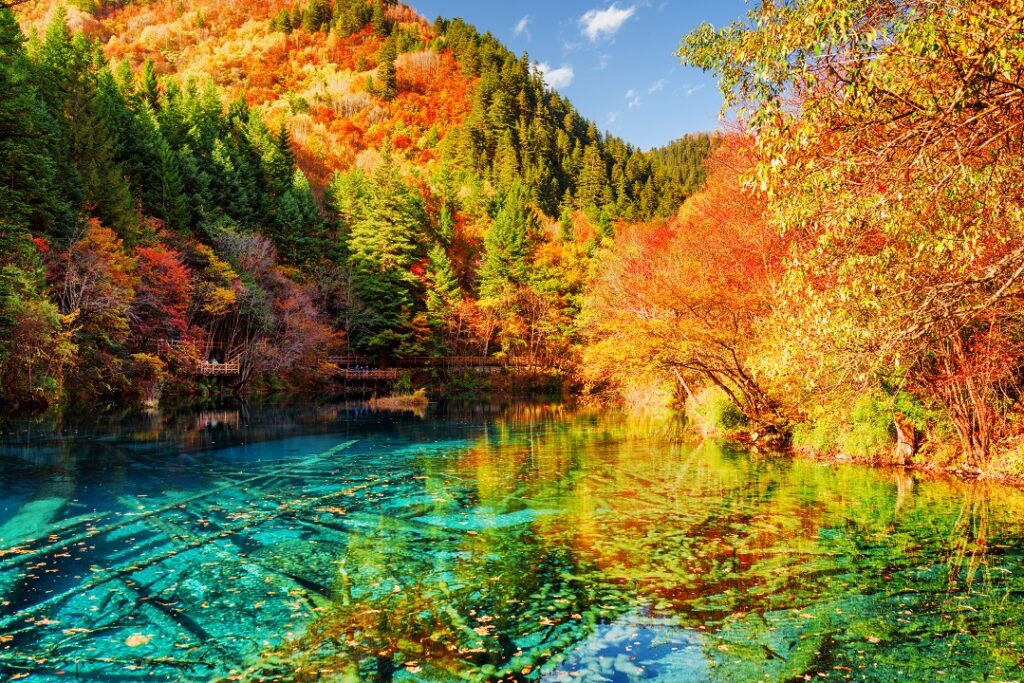
I believe an appreciation for natural beauty is installed in everyone at birth, and if I ever meet someone truly indifferent to nature, I would make it a priority to keep my distance. They say there’s one psychopath for every hundred people; you can never be too careful these days. I can understand if Joe Schmo stands before Guernica and shrugs at what Wikipedia insists is Pablo Picasso’s abstract masterpiece — “not that it would fit over my sofa anyway.” But I struggle to imagine a person who could relish upon Jiuzhaigou’s dreamlike palette — in person, not through a screen — and feel absolutely nothing.
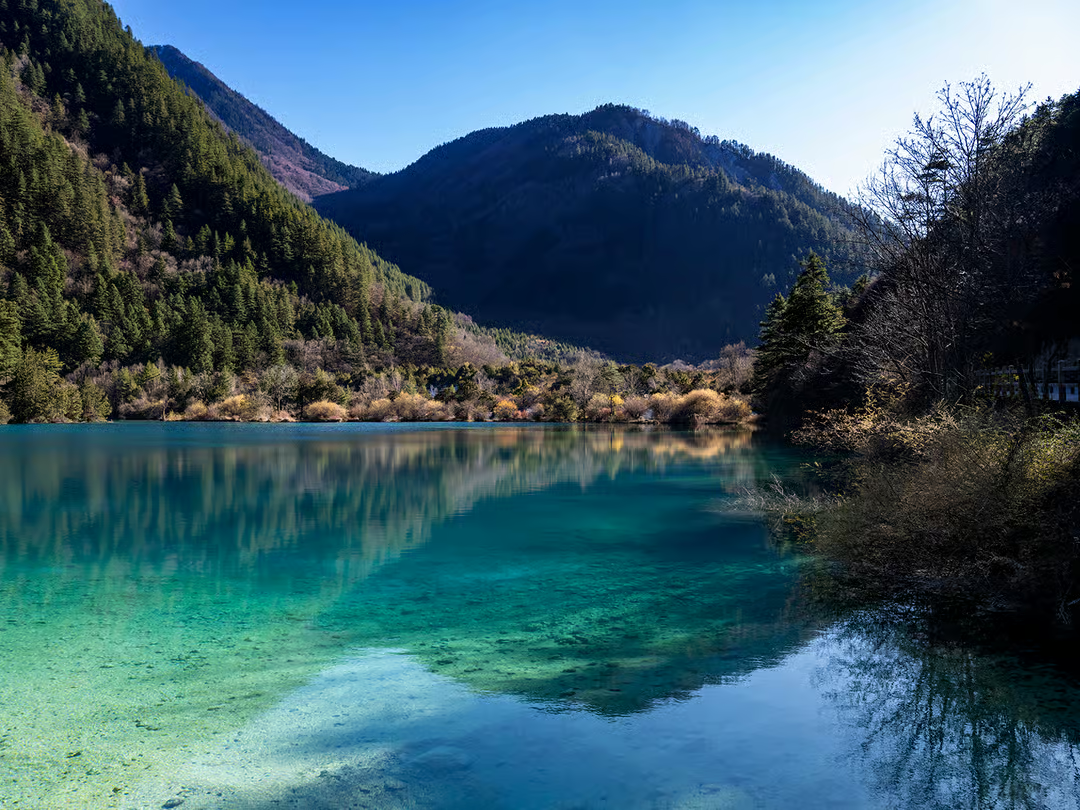
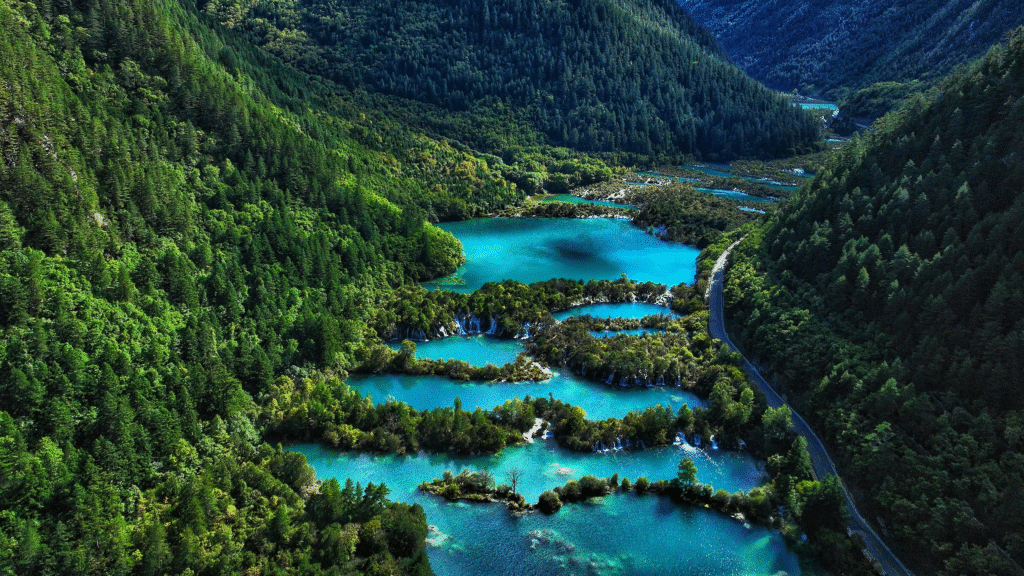
Unlike Norway’s Fjords, which coax your vision up and out; making you wish your eyes’ field of view could expand to take it all in, these delicate karst pools occasionally entranced me to a dead stop. At that moment, I just stopped and let myself look. I didn’t move my eyes for an inch, letting whatever was in front of me simply exist. It reminded me of those dentist TV visuals, the kind meant to calm you down, where nothing really changes but you notice everything. I wanted to let the beauty soak in the way old films like Lawrence of Arabia used to hold a shot — long, quiet, and unhurried. Squint your eyes slightly, and the scene blurs into a shimmer of opalescent hues, reminiscent of a canvas by Claude Monet.
As I snap back to reality when the ambient hum of tourists took over the distant gurgle of waterfalls. Of course, I honored the ritual of the modern traveler: take a mediocre iPhone photo — a preservation of the memory nonetheless.
I usually avoid sensationalist labels like “fairytale” in today’s keyword-obsessed media, but Jiuzhaigou’s opalescent vignettes are so utopian, so idealistic, that one might half-expect them to have been generated by AI — and in that light, the term feels entirely justified.
It reminds me of what Richard Hammond once said about Lake Bled, an idyllic destination in Slovenia:
“If you painted that as a scene, and presented it to someone. They’d just say: ‘You’ve overdone it.’”
— Richard Hammond, The Grand Tour: Eurocrash
Where Exactly Is Jiuzhaigou
Geographically, Jiuzhaigou is a national park that sits at China’s frontier with Tibet, in northwestern Sichuan’s Aba (Ngawa) Tibetan-Qiang Prefecture. It lies roughly 400 km north of Chengdu (the nearest major city), tucked into the southern Minshan Mountains. Zhangzha Town (漳扎镇) is the quiet county seat at the valley’s entrance; here the altitude is already ~2,500 m. The park spans some 600+ km², carved into a Y-shaped network of three valley branches each containing a series of poetically named pools.
Getting There
Most visitors reach Jiuzhaigou via Chengdu.
Although the park is just over 400 km away, the overland journey via car or shuttle takes 7–9 hours due to winding mountain roads. This option is best suited to road-trippers or campers who don’t mind long travel times and sharp bends.
There are two main alternatives:
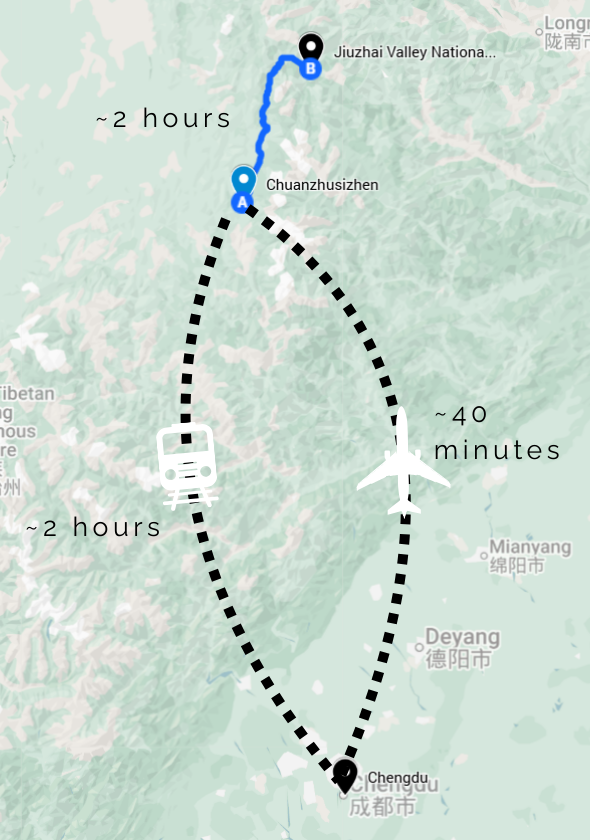
Fly: A 40-minute flight from Chengdu to Jiuhuang (Jiuzhai–Huanglong) Airport, near the town of Chuanzhusi. From there, it’s a further 2-hour drive along high-altitude mountain roads to the park entrance. Helicopter transfers are sometimes available.
High-speed rail: A 2-hour scenic bullet train from Chengdu to Huanglong Jiuzhai Railway Station, also near Chuanzhusi. From the station, continue by road (or helicopter) for the final stretch.
Both options cover roughly 80% of the total distance quickly, leaving the last 80 km to be completed by road through mountainous terrain.
We recommend the scenic rail journey to Chuanzhusi, it allows guests to gradually acclimatise to the altitude while enjoying the landscape in the comfort of business class rail.
Flying to Chuanzhusi is, however, an equally viable option for those who prefer to minimise overall travel time.
Where To Stay & Eat
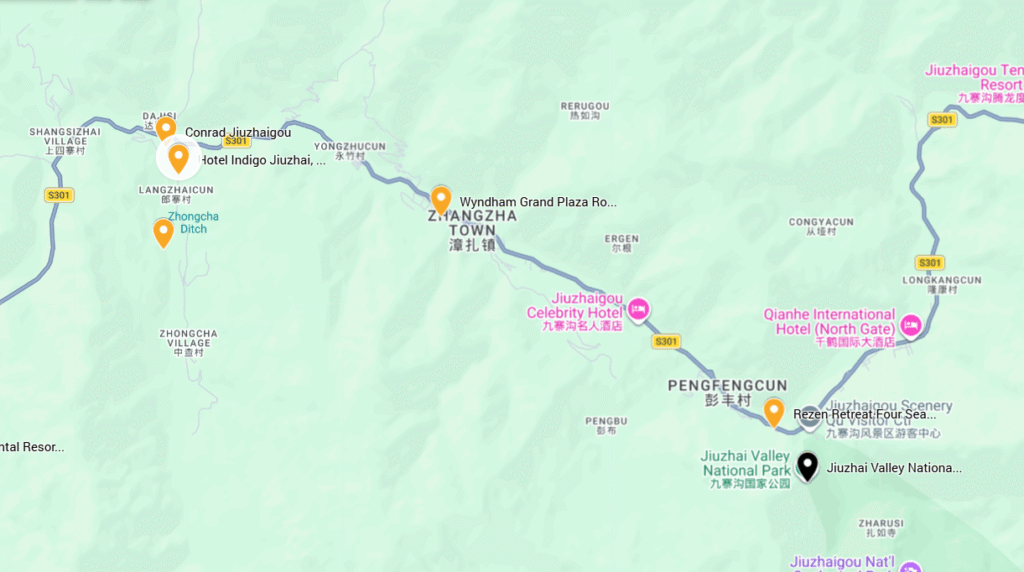
Most international travellers base themselves in Zhangzha Town, just north of the park entrance, where several resorts sit within easy walking distance. Accommodation ranges from family-run Tibetan guesthouses to refined five-star retreats.
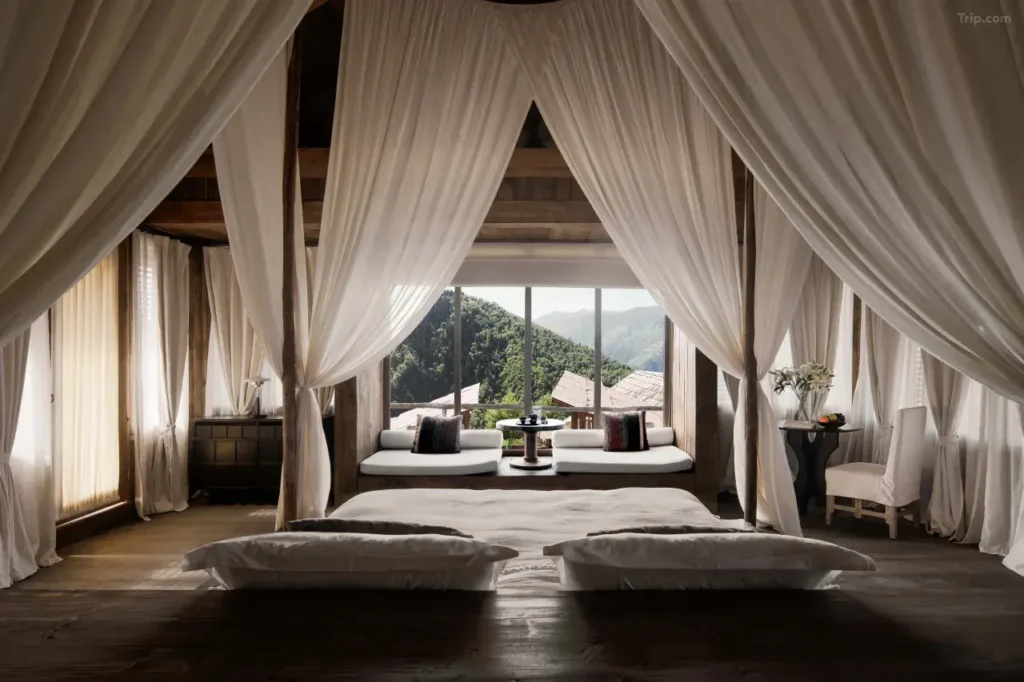
International luxury brands are firmly established here. Conrad Jiuzhaigou (Hilton) and its peers deliver contemporary comfort, while Banyan Tree Jiuzhaigou stands out for its striking architecture and serene setting. Many properties thoughtfully weave traditional Tibetan elements — carved timber, prayer motifs, yak-wool textiles — into a modern design aesthetic.
Expect generous room sizes, heated floors, deep soaking baths, and in many cases in-room oxygen systems for altitude support. We recommend arriving in Zhangzha by early afternoon to rest and acclimatise before enjoying an evening of Tibetan hospitality, complete with butter tea and locally distilled apricot spirits.
Rulai’s Three Best Practices For High Altitude Stays
Choose accommodation with oxygen support.
An in-room oxygen system or on-site oxygen bar can significantly ease early symptoms.
Arrive at least six hours before bedtime.
Sleeping immediately upon arrival at altitude can be difficult. Giving your body time to adjust while awake reduces discomfort overnight.
Avoid long, hot showers or baths on your first evening.
Heat dilates blood vessels and can intensify dizziness, headaches, and breathlessness at altitude.
Food within the luxury resorts offer a clear advantage over dining elsewhere in the valley. Generous breakfast buffets rich in protein and familiar carbohydrates ensure travellers begin their day in Jiuzhaigou energised and well-fuelled. In the evenings, refined in-house dining removes the need to search for restaurants in Zhangzha — where options are limited — and sidesteps potential language barriers. After a visually overwhelming day of sightseeing, returning to a polished, comfortable setting for dinner brings the experience to a seamless close.
Tibetan Cuisine
The true nature of Tibetan cuisine is seldomly discussed. Shaped by high altitude and harsh winters, the food is intentionally calorie-dense and robust. Yak and mutton have a noticeably stronger, gamier profile than the beef many Australian or American travellers are accustomed to. Dairy usage plays a central role, and varies greatly in comparison to Western technique. One of our guests memorably described yak butter tea as tasting like “milk tea dipped in wet dog and oil.”
We suggest you sample before committing to a full Tibetan meal. One specialty worth trying is yak jerky — a lean cut of meat that is naturally air-dried over several months and lightly spiced. The drying process removes excess fat and tempers all gaminess, resulting in a clean, concentrated flavour. Its enduring presence on Tibetan tables, particularly during Tibetan New Year celebrations, speaks to its status as a cultural staple rather than a novelty. It makes for an excellent snack to pack when inside the park where food options are scarce.
Park Logistics
To reach the park, head to the main and only entrance via hotel shuttle, taxi, or private car. Once you arrive, however, the logistics change significantly.
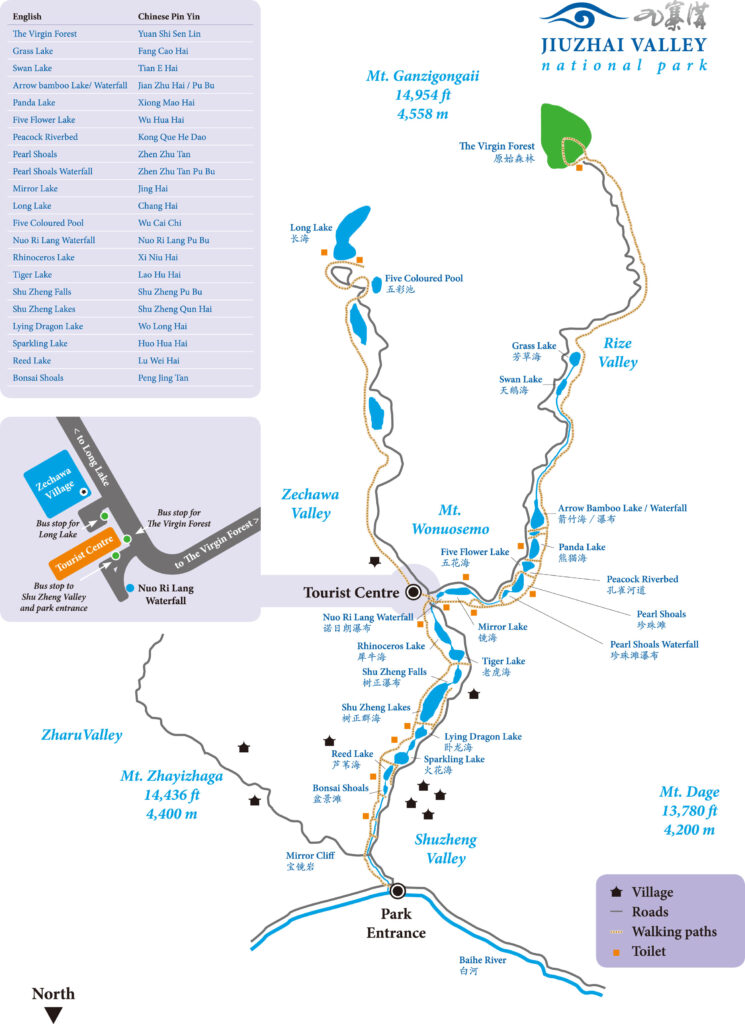
Inside the park, a mandatory shuttle bus system manages all transportation. Private vehicles are strictly prohibited beyond the gates. Because the three main valleys—Shuzheng, Rize, and Zechawa—stretch over 14km, 18km, and 17km respectively, these shuttles are the only practical way to get around.
Tickets are sold as a combined package with the mandatory shuttle (the only way through the park). Official rates (2026) run about ¥190 per adult in high season (Apr 1–Nov 15) and ¥80 off-season; the green electric buses cost a similar ¥90/¥80. Critically, there are no ticket windows on site – you must reserve through the official website or travel platforms like trip.com at least a day before visiting. (Peak days and holidays often sell out days in advance.)
A VIP shuttle service is available, offering priority boarding in exchange for an additional fee. For travellers looking to minimise waiting time and make the most of their day, this upgrade is a worthwhile investment.
Note the park’s hours: in peak season it opens at 7:30 and closes at 18:00 (with final entry around 14:00).
Important Tip: Translation Of Bus Stops
The shuttles in Jiuzhaigou announce each station only in Chinese. To know when to get off despite the language barrier, we recommend translating the destinations you want to visit into pinyin—the Romanized spelling of Chinese characters that shows how they are pronounced—using tools such as Google Translate. This way, travellers can match the name of the station they hear with its pinyin equivalent.
Here are a few examples:
- Five Flower Lake – 五花海 – Wǔhuā Hǎi
- Long Lake – 长海 – Cháng Hǎi
- Bonsai Shoals – 盆景滩 – Pénjǐng Tā
For our clients, this is never a concern, as our travel concierges will accompany you from each shuttle service to the next, ensuring a seamless experience.
The Three Valleys
- Shuzheng Valley
As the gateway to the park, Shuzheng Valley is the most accessible and often the first stop for visitors. While it draws large crowds and group tours in the morning, the atmosphere becomes much more peaceful after the lunchtime rush. At the intersection of the three main valleys sits the tourist center and Nuorilang Restaurant, the primary dining hub for those who haven’t packed their own meals.
Highlights include:
Tiger Lake: Famous for its deep, sapphire-blue waters.
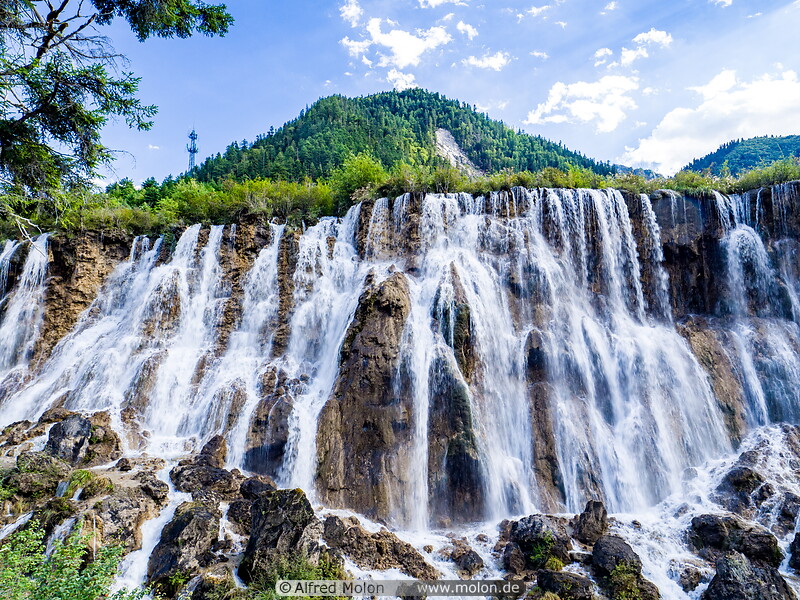
Nuorilang Waterfall: An iconic calcium-crusted cascade and the widest waterfall in China.
Shuzheng Lakes & Village: A breathtaking series of cascading lakes that flow from the Shuzheng Falls. The traditional Shuzheng Village sits just across the water, offering a scenic cultural backdrop.
2. Rize Valley
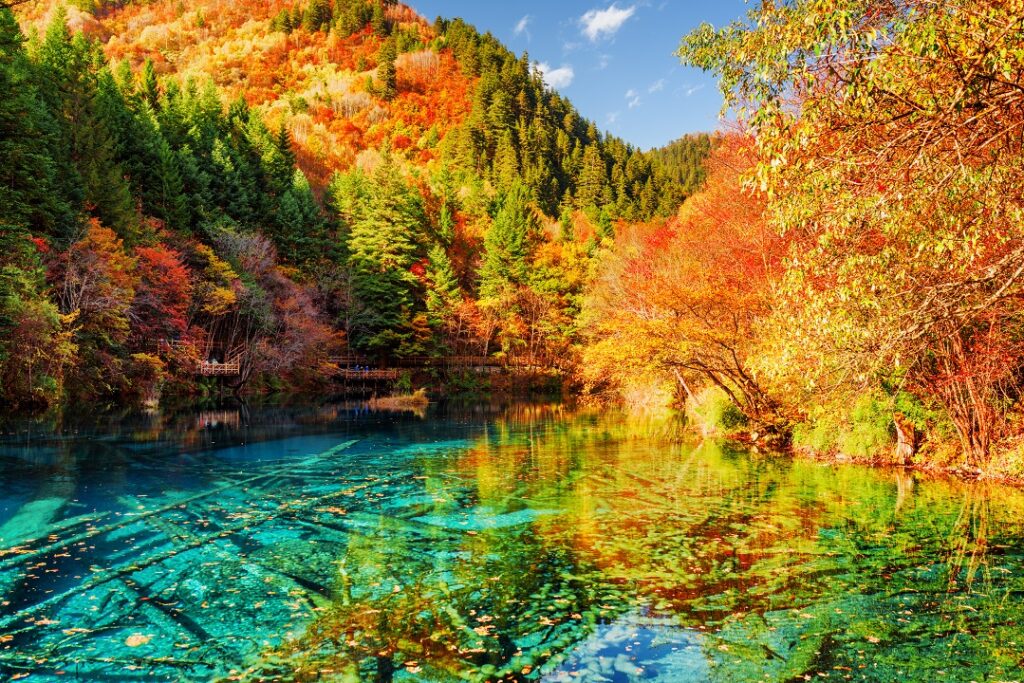
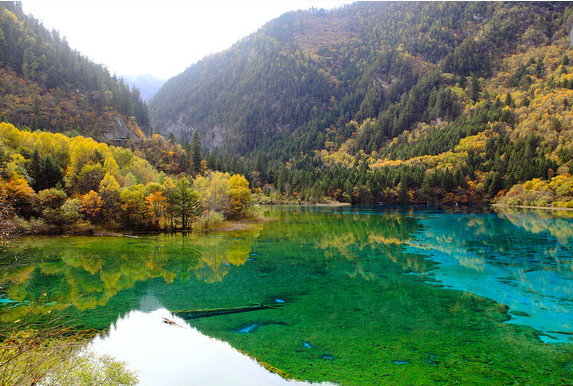
Rize Valley is the park’s “poster child”—frequently crowded, but for good reason. A barrage of “wow” moments commence from the glass-like reflections of Mirror Lake to the tranquil Arrow Bamboo Lake. The undisputed crown jewel, however, is Five Flower Lake (not to be confused with Five Coloured Pool); it is widely considered the most stunning body of water in the park due to its vivid, shifting shades of turquoise and emerald. Since this is a must-go section of the park, it is the highlight.
3. Zechawa Valley
This is the lesser travelled path due to being outshined by the other two valleys and not having a dense cluster of lakes. There are only two named lakes: Long Lake and Five Coloured Pool. The latter of the two is particularly gorgeous, with its calcium rich waters trickling from cracks underneath the ground. This kaleidoscopic pond has the disadvantage of drying up during certain dry seasons.
How Many Days Do You Need & The Perfect Itinerary
While many domestic travellers are happy to devote an entire multi-day trip solely to Jiuzhaigou, international visitors often aim to experience China’s broader diversity by combining multiple destinations within one itinerary. The guidance below is therefore designed to maximise your enjoyment per unit of time, while remaining adaptable to individual preferences and pace.
Given the considerable distances between lakes, a strategic hop-on, hop-off shuttle approach works best; regardless of how many days you plan to spend. This allows travellers to efficiently cover the headline sights, while selecting specific boardwalk sections that offer the most scenic and quieter walking stretches.
However, some past clients have found the constant boarding and disembarking to feel overly transactional, disrupting the natural rhythm of the landscape. A few have preferred to simply continue to march on to preserve immersion. We empathise with this sentiment. The challenge is that the spacing between major lakes is just long enough to make continuous hiking inefficient, and at times less rewarding.
Full hikes through an entire valley (factoring in time to appreciate each site) is not possible given distance and the opening hours each day. The practical solution is a balance between longer, meaningful walking segments in the most scenic zones, and use the shuttle selectively to bypass the less compelling stretches.
As such, the perfect Jiuzhaigou itinerary should:
- Include must-visit sights – Five Flower Lake and Nuorilang Waterfall.
- Aim to avoid the crowds.
- Travel at a pace that allows for appreciation of the scenery.
Avoiding The Herd
When it comes to crowd avoidance, arriving right at opening — around 7:30am (9:30am AEST, UTC+10 i.e. Sydney/Melbourne Winter time) — is one of the most effective strategies. Large coach tours, which are the primary mode of travel for many domestic visitors, simply cannot operate on such an early schedule. This is especially true given that two major segments of the market are families with young children and elderly group travellers. An early start also places you ahead of all same-day visitors arriving later in the morning.
Travelling the entire length of a valley to its end and proceeding backwards towards the park entrance will help reduce the foot traffic, giving travellers a better hiking experience as they work against the common flow of tourists.
The Perfect 1 Day Itinerary: Selective Hiking with Keystone Highlights
Reach Zhangzha Town the day before and sleep early enough to wake up at 6am.
Arrive at the park for the 7:30am opening. Immediately board the shuttle toward Primeval Forest at the far end of Rize Valley (often mistranslated as “Virgin Forest”), passing through Shuzheng Valley beyond the main tourism centre.
From Primeval Forest, begin a 3–4km scenic walk heading back downhill toward Swan Lake via Grass Lake. This roughly one-hour stretch is quiet in the early morning and tends to attract independent travellers and dedicated photographers. The focus here is the unsung beauty of alpine meadow scenery and exposed karst formations, with less emphasis on the intensely coloured lakes found further down the valley.
At Swan Lake Station, rejoin the shuttle system and proceed to Five Flower Lake for the park’s most iconic water view. Afterward, continue by shuttle or on foot to visit Mirror Lake.
By the time you approach the central junction of the three valleys, tour groups will have fully entered the park. From approximately 11:00am to 2:30pm, congestion around the interchange and major stops becomes noticeably heavier.
Walk to the Visitor Service Centre from Mirror Lake, then enjoy a relaxed buffet lunch at Nuorilang Restaurant. After your meal, take a gentle stroll to Nuorilang Waterfall and explore the nearby viewing areas, all within easy walking distance. Once the final park entry closes at 2:00 pm and crowds dwindle down, continue your journey into Shuzheng Valley.
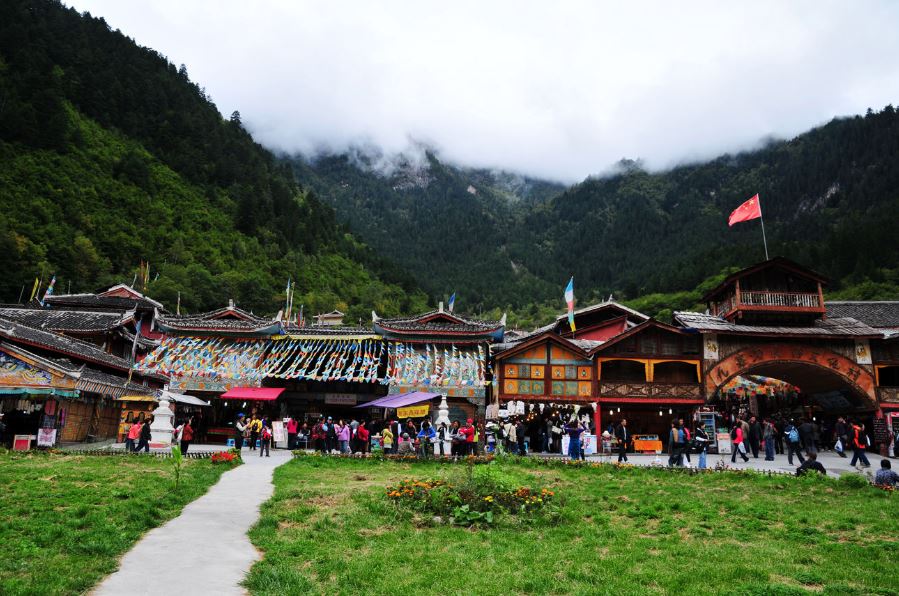
Board a park shuttle from the nearest stop and ride toward Rhinoceros Lake, then continue on and disembark at Shuzheng Waterfall. From here, follow the lakeside paths around Shuzheng Lake and continue on foot to Shuzheng Village, a small Tibetan settlement that offers a glimpse of traditional life within the valley.
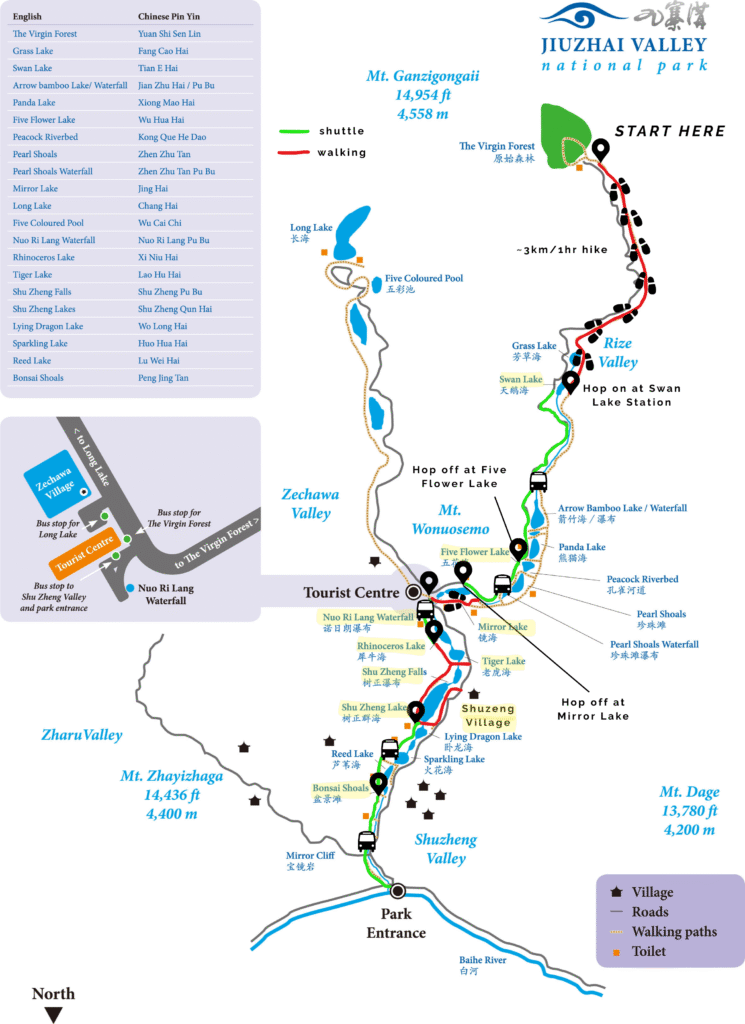
If you have time and energy to explore further, continue to Bonsai Shoals. This stretch of shallow water flows over clusters of low shrubs and small trees grow directly out of the mineral formations. The result resembles a natural bonsai garden.
Seasonality & Weather
Designated a UNESCO World Heritage Site and a national AAAAA scenic area since opening in 1984, Jiuzhaigou has long been a phenomenon within China. Its reputation is captured in a well-known nationwide saying:
“九寨归来不看水”
After returning from Jiuzhaigou, no other waters are worth seeing.
You may have noticed that the park’s official peak season runs from 1 April to 15 November— i.e. the majority of the year. While Jiuzhaigou may be less prominent on international bucket lists, it is one of the most sought-after nature destinations among domestic travellers across China and its 1.4 billion people.
In reality, there is no season when the valleys are completely empty. Absolute solitude is rare; the practical approach is to plan strategically and use timing and route choices to minimise crowd exposure.
In spring (Mar–May), the snowpack melts into the lakes and meadows bloom, but some trails remain bare. Streams roar from the thaw; the crowds are modest and the air is cool and crisp.
Summer (Jun–Aug) brings full waters (lakes brim, waterfalls thunder) and lush greenery. Temperatures are mild (often 8–20°C), but afternoon showers are common. This is also peak season, so expect busier boardwalks. One important consideration is that Jiuzhaigou itineraries typically include Chengdu, where the weather during Summer is extremely hot and humid—markedly different from Jiuzhaigou’s cool, temperate mountain climate.
Autumn (Sep–Nov) is often called the park’s magnum opus. Crisp, sunny days and a riot of gold, orange and crimson leaves make the mountains cinematic, reflecting in the turquoise pools. Visiting during mid-Oct to early-Nov gets the richest colors. Caveat: October into early November also draws the largest crowds (often 30–40,000 per day), so we suggest our clients enjoy the early morning quiet or slightly shoulder-season times.
Once Winter arrives, Jiuzhaigou turns into a quiet, frosted wonderland. Many higher passes and forest loops (such as Primeval Forest) are closed. But the tradeoff is tranquil snow scenes and far fewer visitors. Prices for accommodation and ticketing are slashed, making your winter sojourn an exclusive privilege.
When the weather turns overcast or rainy, adjust your focus to locations that perform well in softer light:
- Five Flower Lake – Its vivid turquoise remains striking even without sunlight, as the colour comes from mineral content rather than surface reflection.
- Panda Lake – The waterfall below becomes especially atmospheric when framed by mist.
- Waterfalls throughout the valley – Cloud cover often enhances their scale, movement, and mood.
- Shuzheng Village – A practical refuge during passing showers. Shelter, a warm drink, or a simple meal under Tibetan hospitality can be enough while the mountain weather shifts again.
In contrast, these locations are best avoided in poor weather:
- Mirror Lake – Wind or rain breaks the still surface, eliminating the signature reflection.
- Long Lake – Without sunlight, the lake can appear flat and muted under heavy cloud.
Best Practices
- Pack plenty of bottled water – bring more than you think you’ll need.
- Bring a raincoat – the weather can be unpredictable.
- Dress in layers – temperatures can vary widely throughout the day.
- Pack snacks – for energy while exploring the park.
- Use bottled oxygen sparingly at first – overuse can slow natural acclimatisation.
- Consider a polarising filter – essential for reducing glare and enhancing photos.
Rulai Insight:
Don’t let the crowds dictate your pace. People stopping abruptly on walkways, slow-moving visitors, or large tour groups blocking the path—can be frustrating and tempt you to rush past. Resist the urge. Moving too quickly not only disrupts your enjoyment, but at Jiuzhaigou’s elevation it also increases the risk of fatigue, breathlessness, and strain. Slow, steady movement is safer—and allows you to experience the valley properly.
Who Jiuzhaigou is Perfect For
Jiuzhaigou is ideal for travellers who love nature and scenic landscapes. Its crystal-clear lakes, cascading waterfalls, and colourful forests appeal to photography enthusiasts and anyone seeking a peaceful, visually stunning environment. Families, couples, and solo travellers alike will enjoy easy-to-follow trails and accessible viewpoints, while those interested in Tibetan culture can appreciate the local villages and heritage. It’s also well-suited for travellers who value calm, restorative experiences despite the overwhelming crowds throughout the park.